Online Bank or Local Branch: Which One Fits the Way You Bank?
 Banks Near Me Writers | Updated
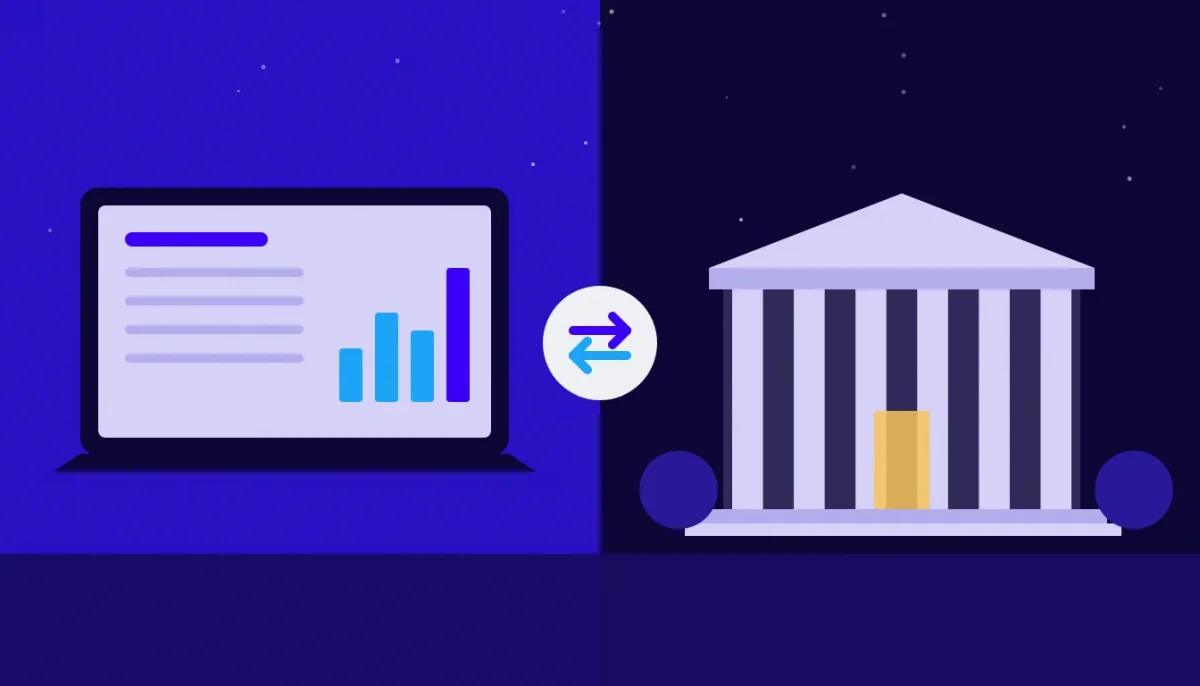
Choose an online bank if you’re paid by direct deposit, rarely touch cash and want the best savings rate. Choose a bank with branches if you deal in cash, need same-day paperwork or want a person across the desk. Deposits at either are protected the same way: both are covered by FDIC insurance as long as the bank is FDIC-insured.
Many people split it: checking at a branch bank, savings online. We cover how that works below.
The short version
- Online: higher savings rates, fewer fees, strong apps, weak on cash.
- Branch: cash deposits, cashier’s checks, notary and face-to-face help.
- Both: checking at a branch bank, savings online, with FDIC coverage applying to each bank separately.
Ask around and you’ll get two strong opinions. One friend hasn’t set foot in a bank in years and earns noticeably more on savings than everyone else. Another wouldn’t dream of keeping money somewhere without a building, because when something goes wrong, she wants to sit across a desk from a human being.
Both of them are right, for their own situation. The honest answer to “online or branch?” depends less on which kind of bank is better and more on how you actually handle money from week to week.
What an online bank gets right
Online banks skip the expense of running branches, and they tend to pass some of those savings on. That usually shows up in three places:
- Higher savings rates. The FDIC’s national average for a standard savings account was about 0.37% as of October 2026. Top online high-yield savings accounts were advertising roughly 4% APY or more around the same time. The gap moves with interest rates, and online rates can change at any time.
- Fewer fees. No monthly maintenance fee and no minimum balance are common, and overdraft fees are often lower or gone.
- Good apps. Since the app is the bank, it usually gets the attention. Mobile deposit, instant alerts and easy transfers are standard.
Ally is a well-known example of a bank built this way, and Capital One sits somewhere in the middle, with a strong online presence and a smaller network of branches and cafés. You can see how that works on our Capital One page.
What about safety? An online bank is as safe as a branch bank, as long as it’s FDIC-insured. Coverage is up to $250,000 per depositor, per bank, per ownership category, exactly the same as at a bank with branches.
One catch: confirm the bank’s name on the FDIC’s site, especially with apps that partner with a bank rather than being one.
Where a branch still wins
The things branches do well are the things an app can’t do, or does badly.

Cash, in and out
This is the big one. Some online banks let you deposit cash at partner ATMs or retail stores, sometimes for a fee, and some don’t take cash at all.

Paper and official stuff
Cashier’s checks, money orders, a medallion signature guarantee, a notary, a safe deposit box. Need a cashier’s check this afternoon to close on a car? A branch is the realistic option.

Complicated problems
Fraud on your account, an estate to settle, a mortgage conversation, a business account with several owners go faster with a person who can see your documents.
If you get paid in cash, run a small business or just like paying with bills, depositing cash into an online bank can be awkward. Online banks can mail you a cashier’s check, but that doesn’t help with a same-day deadline.
Local relationships. Community banks and regional banks, like Arvest in its home states, often know their area and are more flexible with things like small business loans than a call center can be.
Side by side
| Online bank | Bank with branches | |
|---|---|---|
| Savings interest | Usually higher | Often low on standard accounts |
| Monthly fees | Often none | Common, usually waivable with direct deposit or a minimum balance |
| Depositing cash | Limited or not possible, depends on the bank | Easy at the counter or the bank’s ATMs |
| ATM access | Partner networks, sometimes fee refunds | The bank’s own ATMs, plus out-of-network fees elsewhere |
| Loans and mortgages | Often competitive rates, handled online or by phone; the range of products varies a lot | Full range at many banks, with a loan officer who can sit down with you; community banks may be more flexible on small business loans |
| Cashier’s checks, notary | By mail, or not available | Same day |
| Customer service | Phone, chat, secure message; hours vary, some are 24/7 | In person during branch hours, plus phone and chat |
| Deposit insurance | Same FDIC coverage if the bank is FDIC-insured | |
Fees, rates and services differ from bank to bank, so confirm the details with the bank itself before you open an account.
That last row deserves a word. A lot of people worry that an online bank is somehow less safe. If it’s an FDIC-insured bank, your deposits are covered up to $250,000 per depositor, per bank, per ownership category, exactly like at a bank down the street. Some apps that look like banks are actually tech companies partnering with a bank, so check who holds the money. The FDIC explains the details on its deposit insurance page.
The ATM question
For a lot of people, the real deciding factor isn’t interest, it’s cash. Online banks get around the lack of their own machines by joining big networks. Allpoint is one of the largest, with machines in drugstores and big-box stores, and you can find one with our Allpoint ATM finder. Some online banks also refund a few out-of-network ATM fees a month.
If you withdraw cash a couple of times a month, that setup is usually fine. If you’re at the ATM every few days, or you live somewhere without many network machines, the fees can eat up the extra interest. Our breakdown of ATM fees shows how those charges stack up.
Worked example (made-up round numbers, November 2026)
Say you pull cash four times a month at machines outside your network, and each one costs $4 in combined fees. That’s $16 a month, or $192 a year. On a $5,000 savings balance, a rate gap of 3 percentage points is worth about $150 a year. In that case the “better” rate loses. Rates and fees change, so run it with your own numbers.
Before switching, look at your last two months of statements. Count the ATM withdrawals and cash deposits. That number tells you more than any comparison chart.
Why many people end up with both
You don’t have to choose just one. A very common setup is a checking account at a bank with branches near home, for paychecks, cash and the occasional cashier’s check, plus a savings account at an online bank where the emergency fund earns more. Transfers between the two are free at most banks and take a day or two.
That split gives you the higher rate without giving up the counter. The only real cost is keeping track of two logins.
So which way should you lean?
An online bank is probably a good fit if you’re paid by direct deposit, rarely handle cash, and are comfortable sorting things out by chat or phone. A branch-based bank makes more sense if cash is part of your routine, you run a small business, or you simply sleep better knowing there’s a door you can walk through. If you’re going with a branch, it helps to find one close enough to actually use. Our best bank near me page is a good place to compare what’s around you.
When you’re ready to open an account, our list of what to bring to open a bank account covers the ID and paperwork.
Deposit insurance works the same way with two banks. Each bank is insured separately up to the FDIC limit, so splitting your money between a branch bank and an online one doesn’t weaken your coverage.
Rates, fees and limits change and aren’t guaranteed. This is general information, not financial advice.
Data sources
- FDIC — National Rates and Rate Caps — National average savings rate, October 2026
- FDIC — Understanding Deposit Insurance — $250,000 coverage per depositor, per bank, per ownership category